Maintenance Programs for Sports Fields
What to Expect and How They Actually Work
If sports field maintenance only happens when something breaks, the plan is already failing.
That might sound blunt. It’s also true.
Fields that rely on “as-needed” services tend to get treated symptom by symptom. Weeds show up, so weeds get sprayed. Bare areas appear, so seed gets thrown down. Drainage slows, and everyone hopes the next storm isn’t the one that cancels a game.
Hope, however, is not a maintenance strategy.
That’s why structured maintenance programs for sports fields exist — and why more facilities are moving toward them every year.
Why Structured Maintenance Programs Matter More Than They Used To
Athletic fields carry more weight today than they did a decade ago. Usage is higher. Expectations are higher. And the cost of cancellation — officials, travel, scheduling chaos — is high enough that games often have to happen, whether conditions are ideal or not.
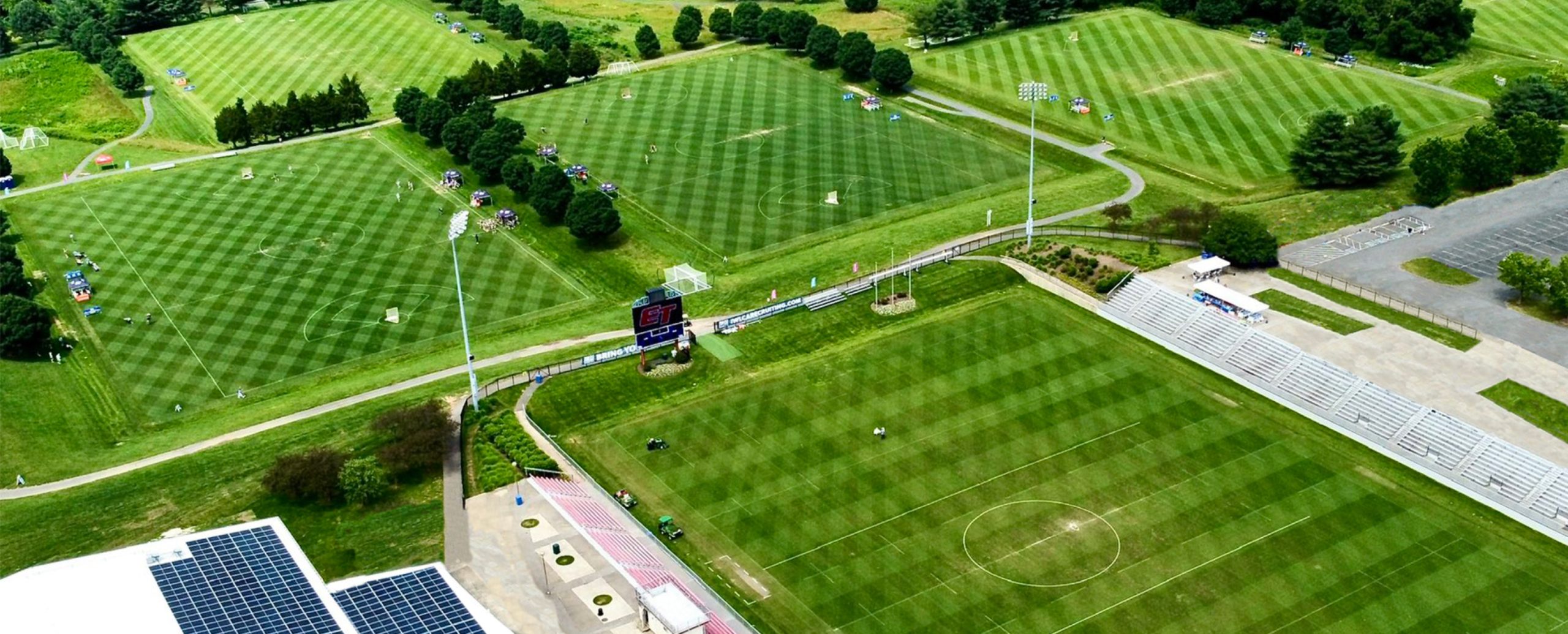
At the same time, fields now have reputations. Teams talk. Leagues notice. Schools compete, especially private schools and higher-ed institutions where there are big opportunities for student-athletes. Today, fields and facilities play a real role in attracting athletes, families, fans — and donors.
A field that performs well becomes a quiet advantage. One that doesn’t becomes a constant headache. One that builds reputation. One that players love to play on.
That shift has turned structured maintenance from a “nice to have” into an operational requirement.
What a Maintenance Program Actually Is
Every field is different. The foundation isn’t.
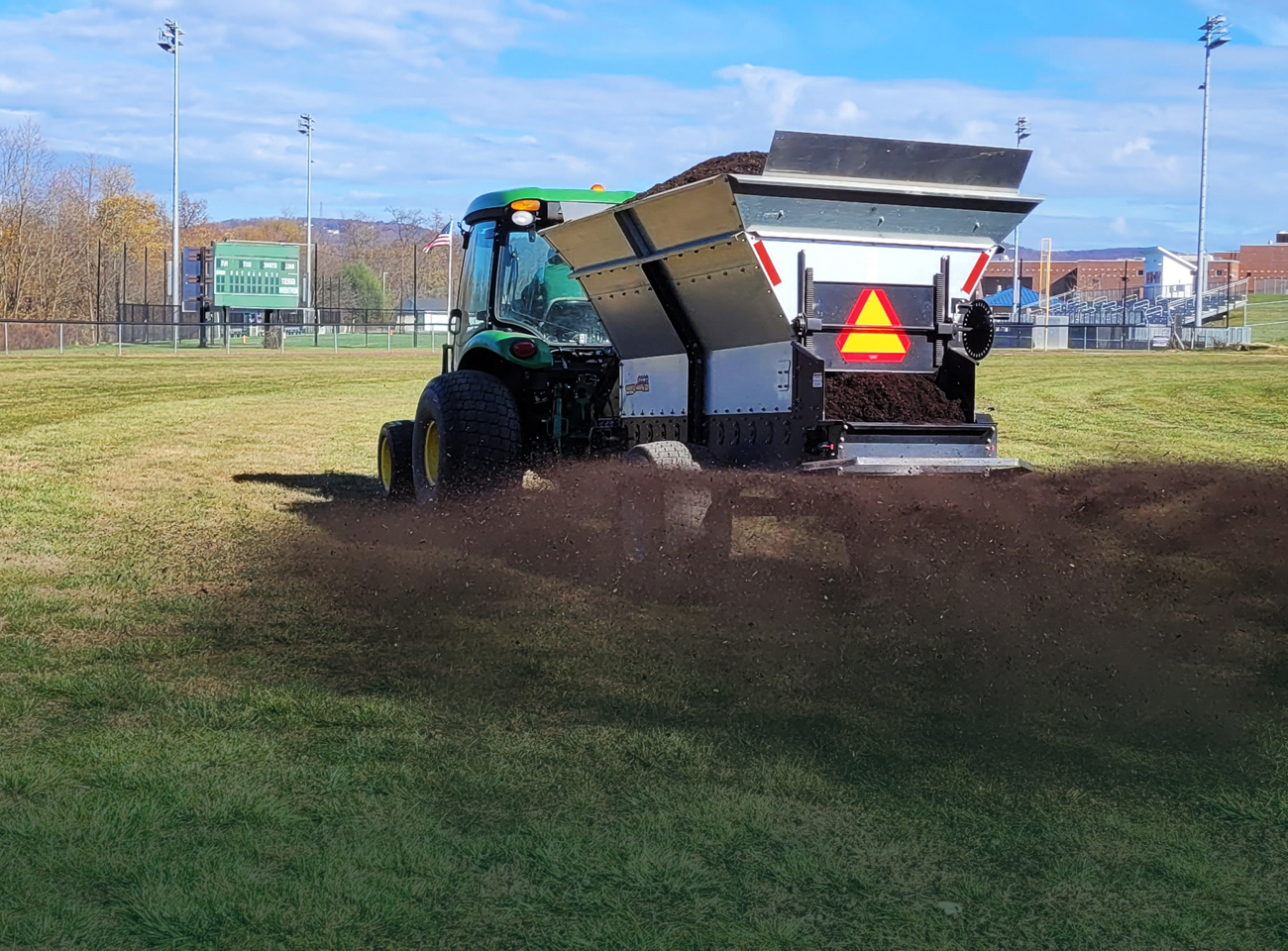
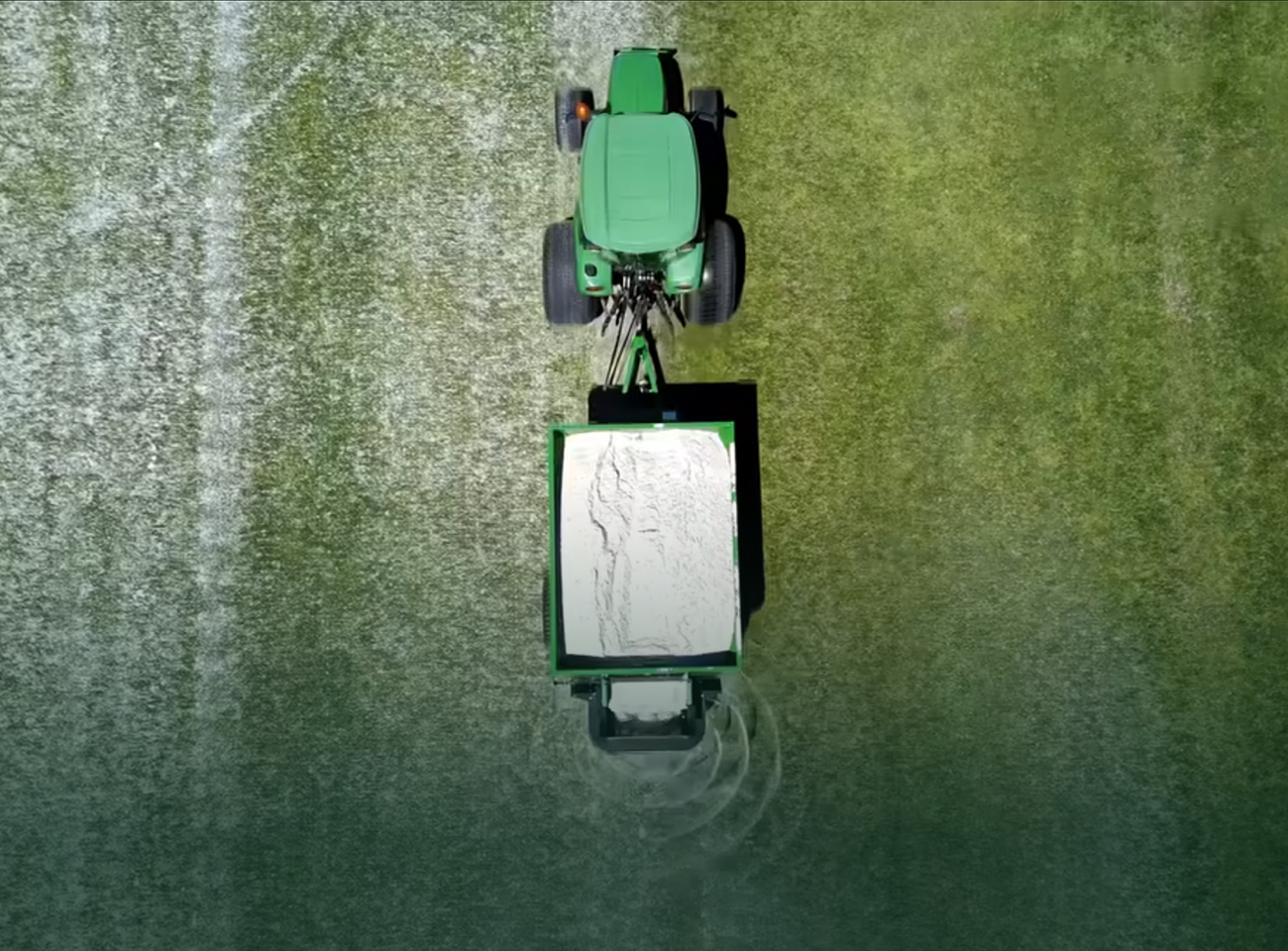
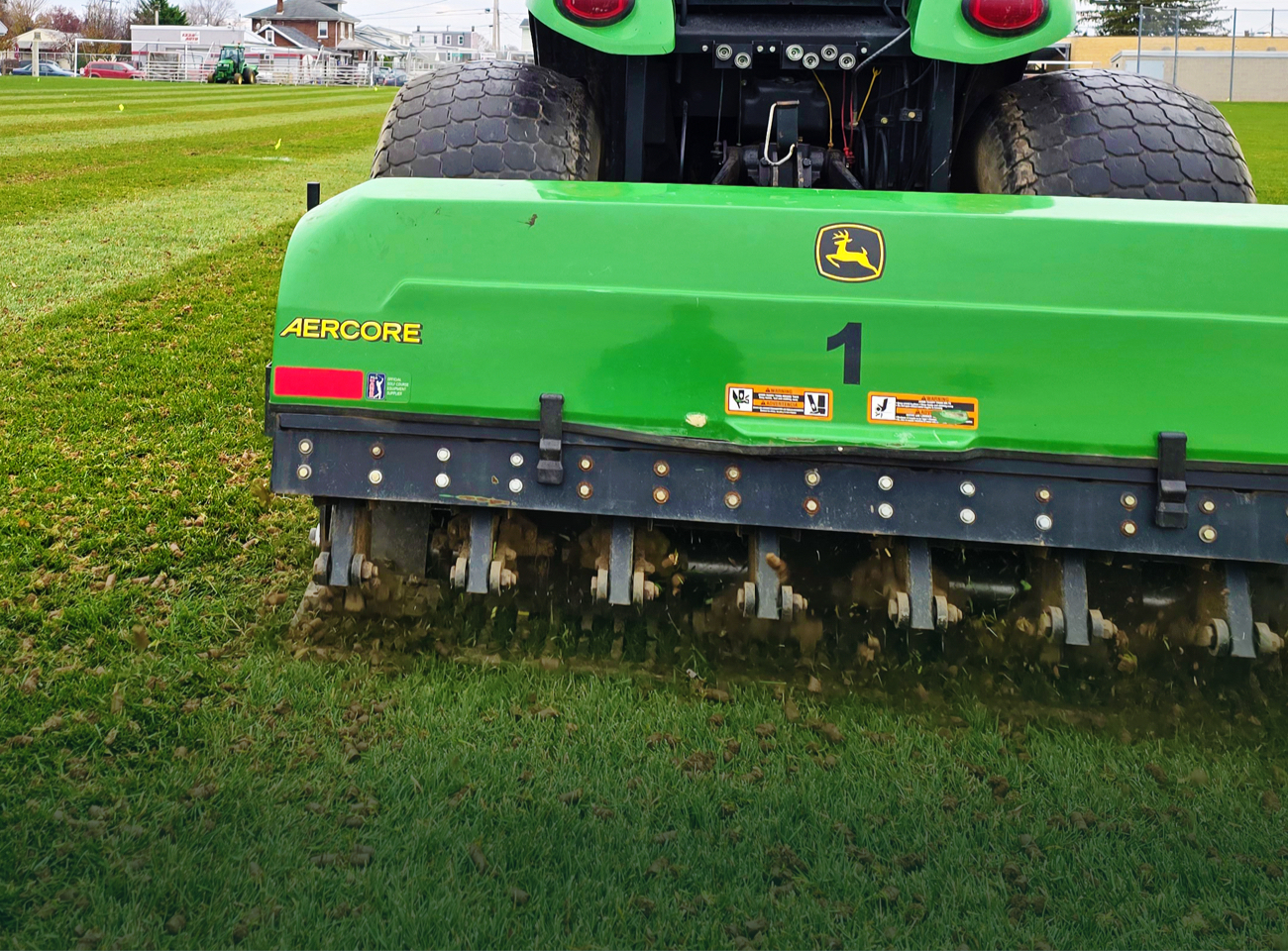
At a baseline, every Hummer maintenance program includes fertility management, weed, insect, and disease prevention, aeration, and overseeding. Those may sound like basic practices, but execution is anything but simple.
Each step requires the right products, the right equipment, and the right timing. Miss the window or apply the wrong input, and results can slide fast.
There’s also a layer most people don’t think about. Every service visit doubles as an on-site assessment. Fields are observed continuously, not just treated. Subtle changes get flagged early, when they’re cheaper and easier to address. Our technicians watch for problems and communicate with clients early to prevent bigger issues.
That’s where structured, well-planned maintenance programs quietly earn their value.
Built Around How Fields Are Actually Used
No two fields should be treated the same, even on the same campus.
Maintenance programs are built around reality: which sports are played, how often, at what level, and on what type of turf. A varsity stadium behaves differently than a middle school practice field. Ryegrass responds differently than bluegrass or Bermuda.
Climate matters. Seasonality matters. So does the moment when a field needs to be at its best.
The goal isn’t to apply products when it’s convenient. It’s to have fields in peak condition when they’re in season.
What Programs Prevent
The longer issues go unaddressed, the fewer options remain.
Minor wear can usually be corrected through maintenance — if there’s time and favorable weather. When that window closes, some repairs simply can’t happen fast enough. That’s when sod becomes the only option. Or worse, fields have to come out of rotation entirely.
A structured program reduces those risks by keeping fields in a recoverable state. Not perfect. Recoverable.
With a plan in place, the question “Will the field be ready?” largely disappears. Field use is known. Recovery strategies are planned in advance. Heavy tournaments or weather events don’t trigger panic — they trigger execution.
That certainty matters.
The Operational Payoff
Professional maintenance programs allow schools and teams to manage budgets better, too.
Once a program is defined, pricing can often be locked in across multiple years. That creates budget stability and removes surprise spending. Results become predictable. Communication stays consistent. Decisions aren’t made in the dark.
Maintenance also protects the investment already made in field construction or renovation. In many cases, Hummer’s maintenance team takes over immediately after construction to manage grow-in, carrying that knowledge forward into long-term care. This reduces errors and ultimately saves time and money.
Think of a professional maintenance program less as upkeep and more as an insurance policy (that actually pays out.)
Working With In-House Teams
Maintenance programs aren’t designed to replace in-house staff. They’re designed to support them.
There are things internal teams do exceptionally well — line painting, infield prep, daily mowing. By handling specialized, time-intensive work, maintenance programs allow internal teams to focus where they add the most value.
When collaboration is real, fields improve faster and stay better longer. That’s why so many field crews partner with Hummer to support their day-to-day operations. Our clients recognize Hummer as an expert, and a great teammate.
What Long-Term Success Looks Like
Five or ten years into a maintenance program, success is quiet. Fields perform consistently. Athletes trust the surface. Maintenance and athletic departments stop worrying about fields as a limiting factor.
The fields become a source of pride instead of a recurring problem.
That’s the point.
A Practical Next Step
If you manage athletic fields, you already know where the pressure points are. You can see which areas struggle to recover. You know which seasons feel tight. You’ve probably wondered whether a problem could have been avoided with better planning.
That’s where a professional assessment helps.
A field walk and an honest evaluation can clarify what’s working, what’s being missed, and what a realistic maintenance plan would look like for your fields, your schedule, and your budget. Not a generic treatment list. Not a sales pitch. Just a clear picture and informed options.
Hummer offers a complimentary athletic field maintenance assessment for facilities that want clarity — whether they move forward or not.
Sometimes the most valuable outcome is simply knowing where you stand.
If you’re unsure which of these services your fields truly need — and which are being missed — Hummer offers a complimentary maintenance assessment with a practical action plan.