
Athletic Field Maintenance Isn't Lawn Care
Reduce injuries, enhance playability, and control costs with a professional maintenance program
An athletic field doesn’t just need to “look good.” It needs to perform consistently, drain properly, recover under pressure, and provide safe footing — week after week, season after season. Fields are costly to build and renovate, and are often high-stakes assets for teams at all levels. Yet in many organizations, maintenance planning is prioritized only after turf performance declines, safety concerns show up, or expensive repairs become unavoidable.
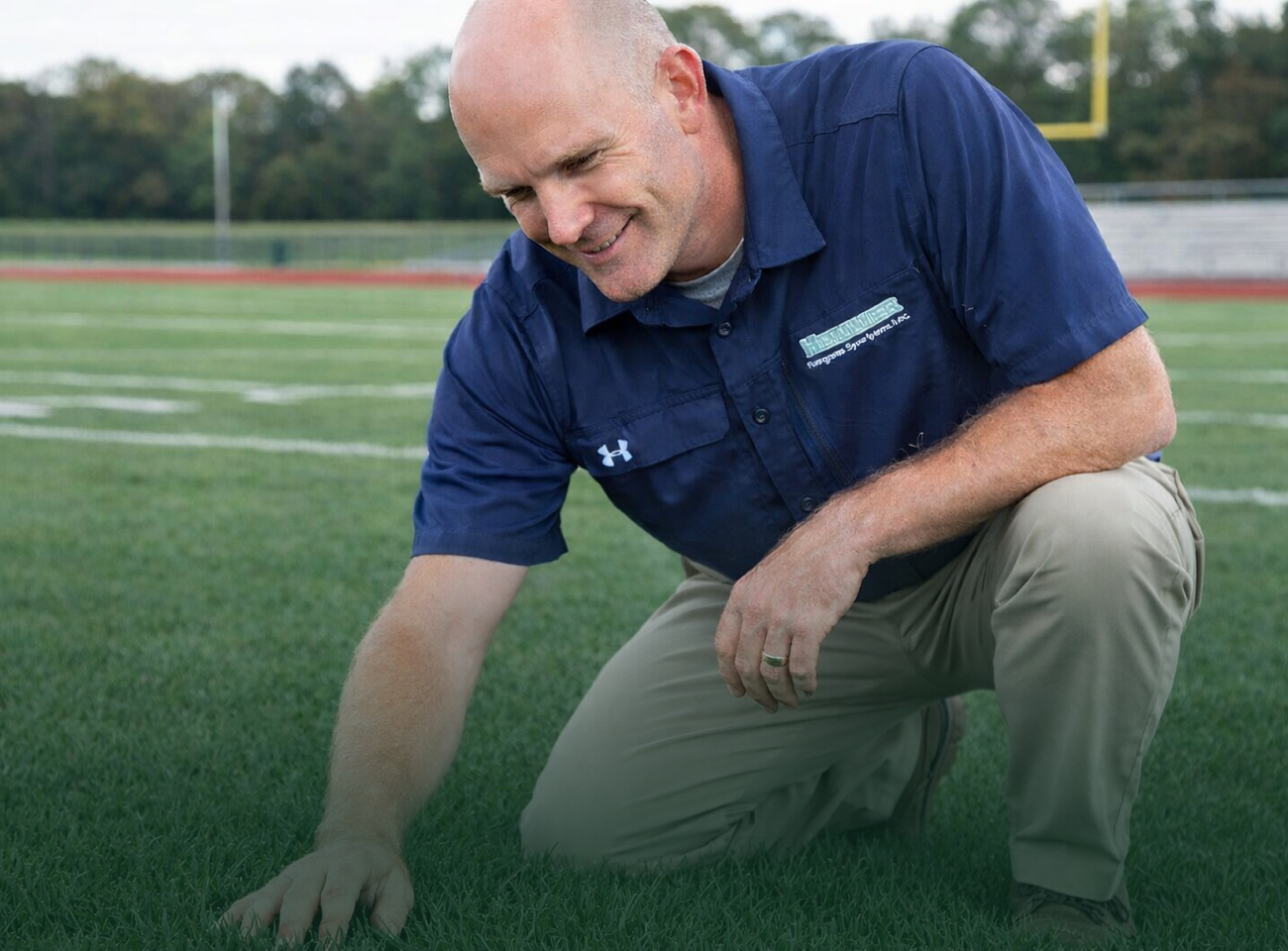
This article is designed to reset the narrative. We recently sat down with Matt Hummer, CEO of Hummer, to get practical insight on what professional athletic field maintenance actually includes (and why it’s fundamentally different from routine turf care). Matt’s perspective comes from decades in the industry and hands-on experience with fields at every level, from community complexes to elite venues.
What “Professional Athletic Field Maintenance” Really Means
Most people understand lawn care: mowing, fertilization, maybe weed control. Sports turf is different — because the field is different.
“Maintaining a lawn is different than a sports field that is subjected to heavy use that wears and stresses the grass. Sports fields are consistently in a state of repair and growth to prepare them for the next season’s use… [and] sports fields need to be smooth to allow for consistent ball roll.”
– Matt Wimer, CEO, Hummer
Professional athletic field maintenance is the discipline of keeping a highly used surface safe, predictable, and durable, while continually repairing wear, reinforcing turf density, and managing soil conditions that directly affect performance. A true athletic field maintenance strategy is designed to:
- Build and sustain a dense, uniform turf stand
- Improve traction and stability
- Maintain consistent surface smoothness
- Support root health and soil structure for faster recovery
- Reduce the risk of weed invasion, disease, and compaction
- Protect budgets by preventing “emergency spend”
Field Maintenance Is Still Undervalued (But That’s Changing)
For years, many facilities got by with a basic approach of outsourcing field maintenance to a general lawn care provider or trying to handle everything internally. But expectations are changing. Matt sees the shift firsthand.
“With increased eyes on fields, what worked in the past… doesn’t work anymore. The time it takes to mow, line and paint fields, and prepare infields are all a district team typically has time for… the fertilizing, aerating and seeding are put off because those things ‘don’t have to’ get done.”
In other words: most internal teams don’t lack effort; they lack time, specialized equipment, and turf-specific training. And when that happens, the highest-impact practices get delayed. That delay shows up later as:
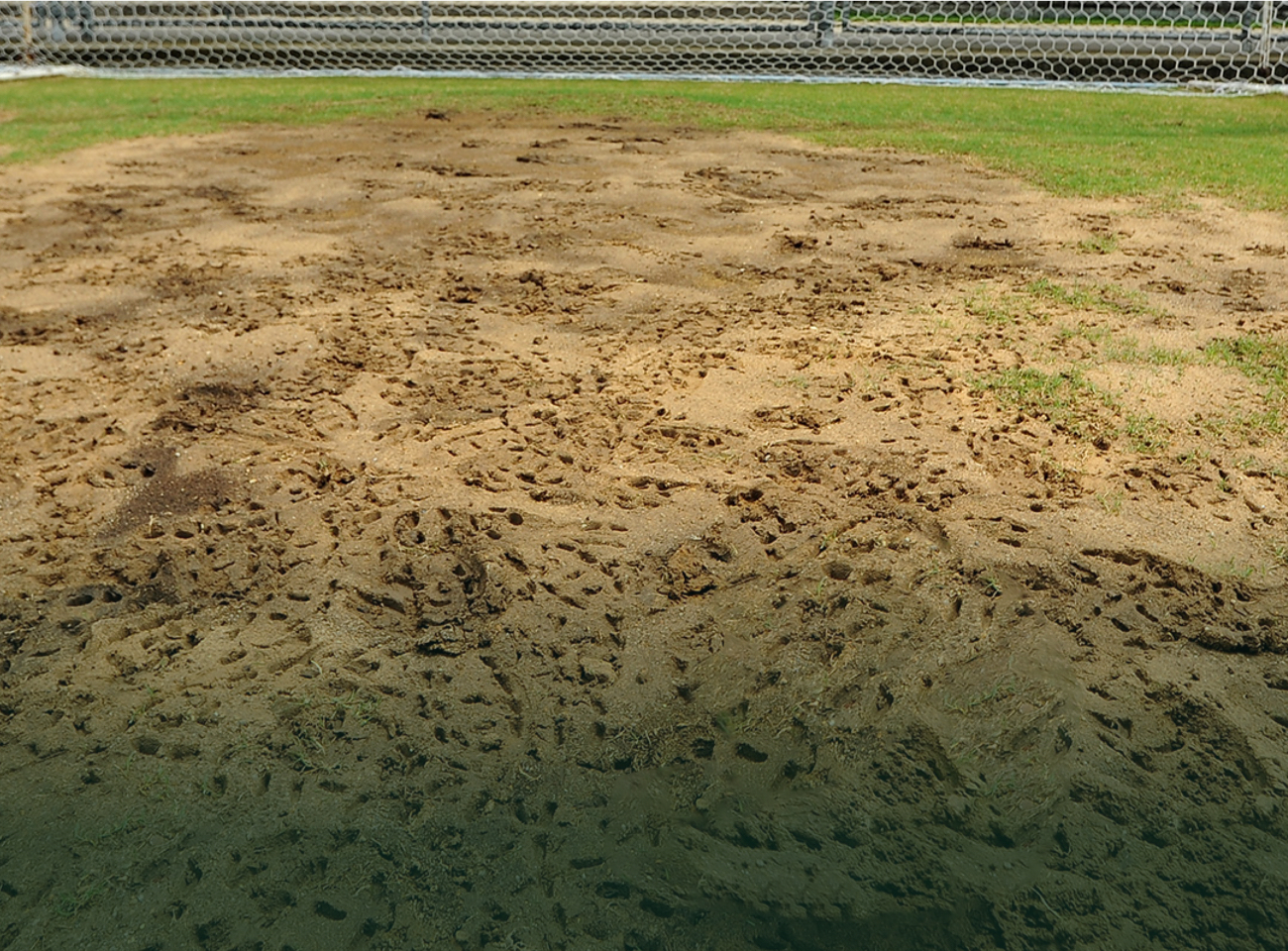
- Bare areas that expand
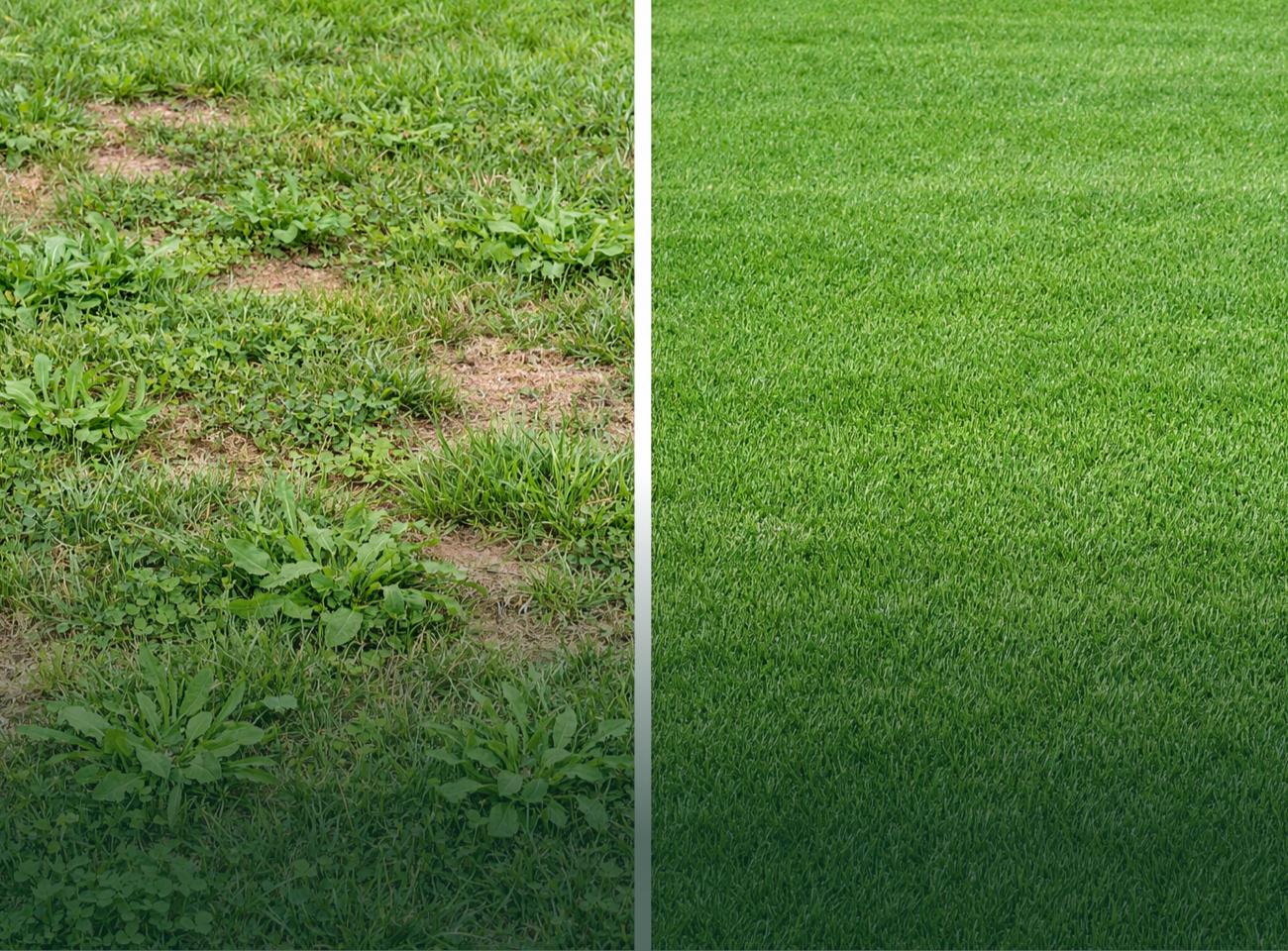
- Weed pressure that explodes
- Compaction that worsens drainage and root depth
- Uneven surfaces that become safety concerns
- Bigger renovation needs (and bigger invoices)
If your field is showing any of these signs, it’s important that you assess the situation and develop an action plan before things get worse.
How Hummer Evaluates a Field: The Indicators That Matter
When Hummer assesses a sports field, the process starts with what you can see — but it doesn’t stop there. Matt explains the first questions he asks himself when he arrives for an on-site maintenance assessment.
“Visually you can tell a lot… bare spots in typical wear areas… weed population… how thick and uniform is the stand of grass. Then I start asking questions. What is the field used for? How much is it used? How’s it play?”
From there, the evaluation expands into underlying causes. This can range from drainage issues, irrigation limitations and soil conditions, to compaction patterns, turf type and even weather patterns. And then comes the most important part: a realistic plan.
“Once we have figured this all out we can recommend an action plan. Can we get the field back in shape through maintenance or does it need a surface renovation with seed, aeration and topdressing?”
One key nuance: not every field needs to look like a stadium to be safe — but the expectation level matters.
“The visual expectations for a stadium field are higher than a practice field… Both need to be safe… so the level of the field is important… and that might dictate budgets and inputs.”
The Core Maintenance Services That Drive Field Performance
A professional maintenance plan is not just a quick service from time to time. It’s more like a coordinated system. Here are the services that serve as the backbone of long-term athletic turf performance.
1. Soil & Turf Condition Assessment
You can’t fix what you don’t diagnose. Regular inspections and soil evaluation inform everything else: nutrient planning, timing, seed selection, and corrective priorities. This prevents wasted spend on blanket treatments that don’t match actual field conditions.
2. Aeration & Decompaction
Compaction is one of the fastest ways to choke out a field, especially under heavy traffic. Aeration improves infiltration, oxygen flow, and root depth, and it’s foundational to recovery. High-use fields typically need more inputs – aeration, seeding, fertilizer, chemistry – and a higher budget.
3. Overseeding
Overseeding isn’t cosmetic. It’s how you rebuild density, improve durability, and introduce better-performing turf varieties. The best fields start the season with a lot of grass. A dense stand of grass is also your best defense against weeds. That’s why aeration and overseeding is critical to field repair and recovery. Seed choice matters, too. For example, overseeding with specialized grass varieties that are selected for durability and athletic field performance is a critical detail that is easily missed by inexperienced maintenance teams.
4. Topdressing & Surface Management
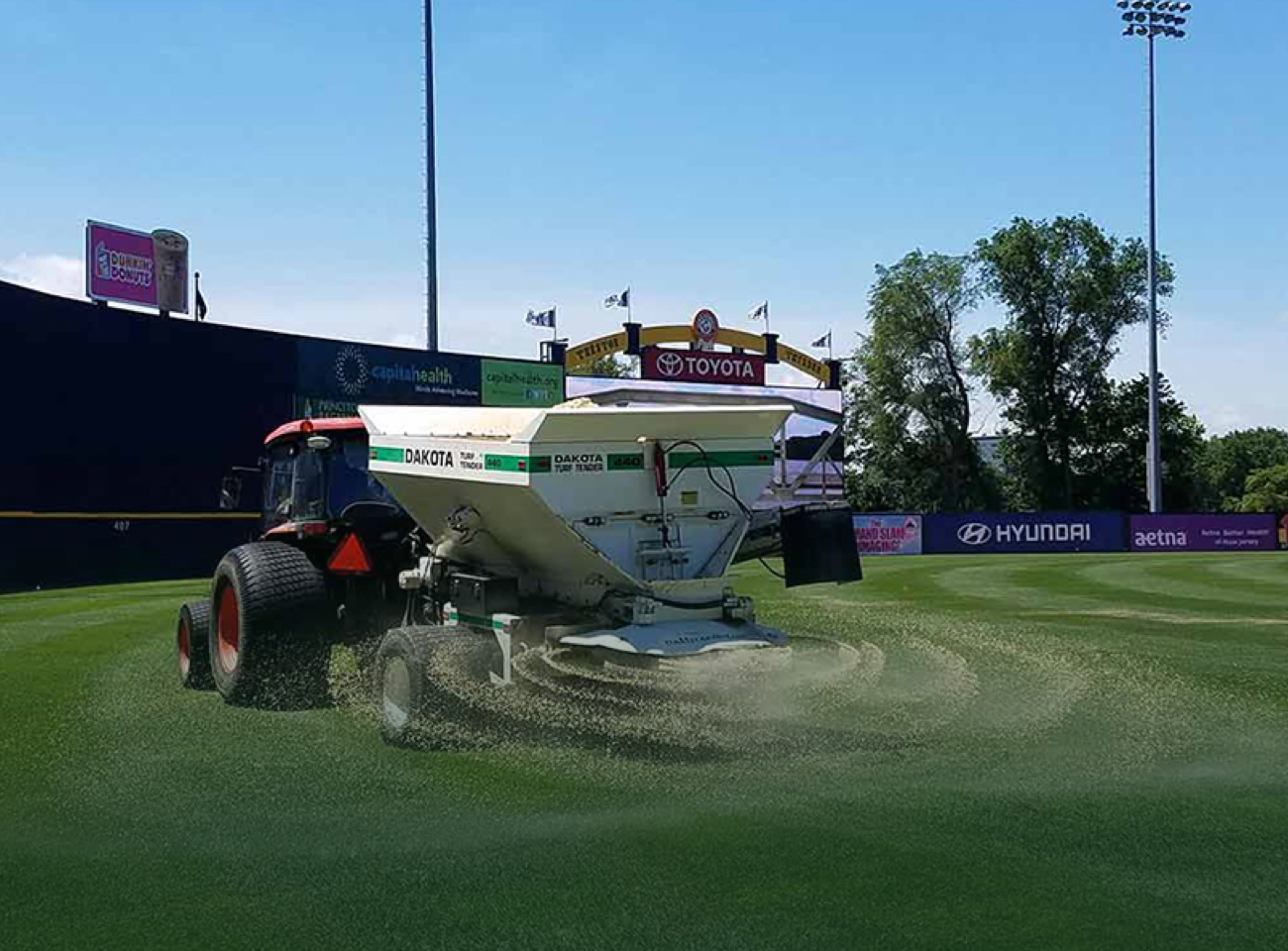
Field smoothness isn’t just about aesthetics. It affects ball roll, predictability, and safety. Topdressing supports leveling, improves soil structure, and helps integrate overseeding and aeration results.
5. Weed, Insect & Disease Management
Weeds and insects are bothersome to fans and players, and undermine footing, surface integrity, and wear tolerance. Prevention is often the smarter (and less expensive) path. Hummer’s standard program employs weed and insect preventatives that limit summer annual weeds and insect damage. In high-expectation environments, proactive disease control like preventative fungicides can be key to crushing turf diseases before they start.
If you’re unsure which of these services your fields truly need — and which are being missed — Hummer offers a complimentary maintenance assessment with a practical action plan.
“Resetting” a Field Without Full Reconstruction
Sometimes a field needs more than routine input, but not a full rebuild. That’s where specialized services like fraze mowing come in to play. Fraze mowing is essentially a planer that grinds the surface off to a specific depth. This leaves a smooth surface with most of the thatch and organic matter removed.
Every field reacts differently to this technique. In Bermuda systems, for example, regrowth can take just two weeks in ideal summer conditions. For sports fields, the decision depends on surface grade and schedule. One giveaway is undulation. If an undulation appears, the field may need to be regraded – but if surface irregularities are underfoot and minor, fraze mowing could be an ideal fix. Often, the best option is a high-impact combination of aggressive aeration, overseeding and topdressing, with a focus on adding new grass varieties to the existing turf stand.
Athlete Safety: The Non-Negotiable Outcome of Good Maintenance
For many teams and schools, athlete safety is non-negotiable. A field that is properly maintained will always be the safest surface for an athlete. Poorly maintained fields have the opposite effect. The chain reaction is predictable:
- Bare areas → uneven surfaces over time
- Weeds → slippery footing and no wear tolerance
- High-use + low maintenance → rapid degradation
Weeds and bare areas do not offer good footing. Over time, bare areas turn into uneven areas on the field. This can be very dangerous to athletes, causing injuries and affecting play. To prevent this, watch for the warning signs that a field is trending unsafe, like large bare areas before field usage has started in the early season) and heavy weed infestation. If you see these signs, you may have only days or weeks before things can get dangerous and create unsafe conditions for your players.
Different Facilities, Different Realities: How Hummer Adapts
Pro & Division I environments
In many professional and top collegiate settings, Hummer often supports an in-house field manager by bringing specialized equipment or helping execute high-volume maintenance faster.
“When we are working for a field manager and supporting them with specific, specialized equipment… deep tine aeration, slice seeding… we can save them a lot time. For example, we can aerate and sweep all their fields in one day vs. the same thing taking them all week.”
Community and municipal complexes
These facilities often face two unique constraints: high usage, and fields that were never built to the performance level now expected. Solutions become a mix of agronomics, prioritization, and smart tradeoffs like targeted sodding in goal mouths where seed will never mature under constant play.
Budget constraints (and honest conversations)
Hummer’s approach to budget is direct and transparent. We understand that every program and every field has unique needs and ability to invest in their field.
“We like to present a program that we feel will meet their needs. If we need to trim services, we will explain upfront what kinds of risk that opens them up to from an agronomic point of view. In every situation, communication is key to building strong relationships.”
This is what decision-makers deserve: a plan aligned to reality, with clarity on what outcomes to expect, and what risks you’re accepting if certain practices get deferred.
Why Long-Term Partnership Wins (And What Hummer Clients Say They Value Most)
One-off services can help in a pinch, but fields don’t transform overnight. The turnaround time for a maintenance program to show measurable improvements can be one full growing season. That’s why it is important to choose the right field maintenance partner and build a long-term plan with them – because the longer Hummer works with a site, the more effective the program becomes.
“We learn the intricacies of the fields, microclimates, certain fields that see increased disease pressure… [and] develop a relationship that allows us to make suggestions… field usage, field rotation and maintenance timing.”
When clients describe what differentiates Hummer, Matt returns to execution and responsiveness:
“We do what we say we are going to do, when we say we are going to do it. We want to solve people’s problems and take their sports fields off their list of things they need to worry about.”
Ready for a Clear, Practical Plan?
Long-lasting, safe, playable fields require great maintenance. Want better fields? Then start with a Complimentary Maintenance Assessment by Hummer. This season, Hummer is offering a no-cost athletic field maintenance assessment and customized program quote. If you’d like Hummer to evaluate your fields and build a season-ready action plan, fill out this short form and we’ll take care of the rest.